Yandex DataLens workbooks and collections


Workbooks and collections are a new way to store objects in DataLens, which is alternative to the old navigation across folders. This new approach allows you to place DataLens objects in special containers:
-
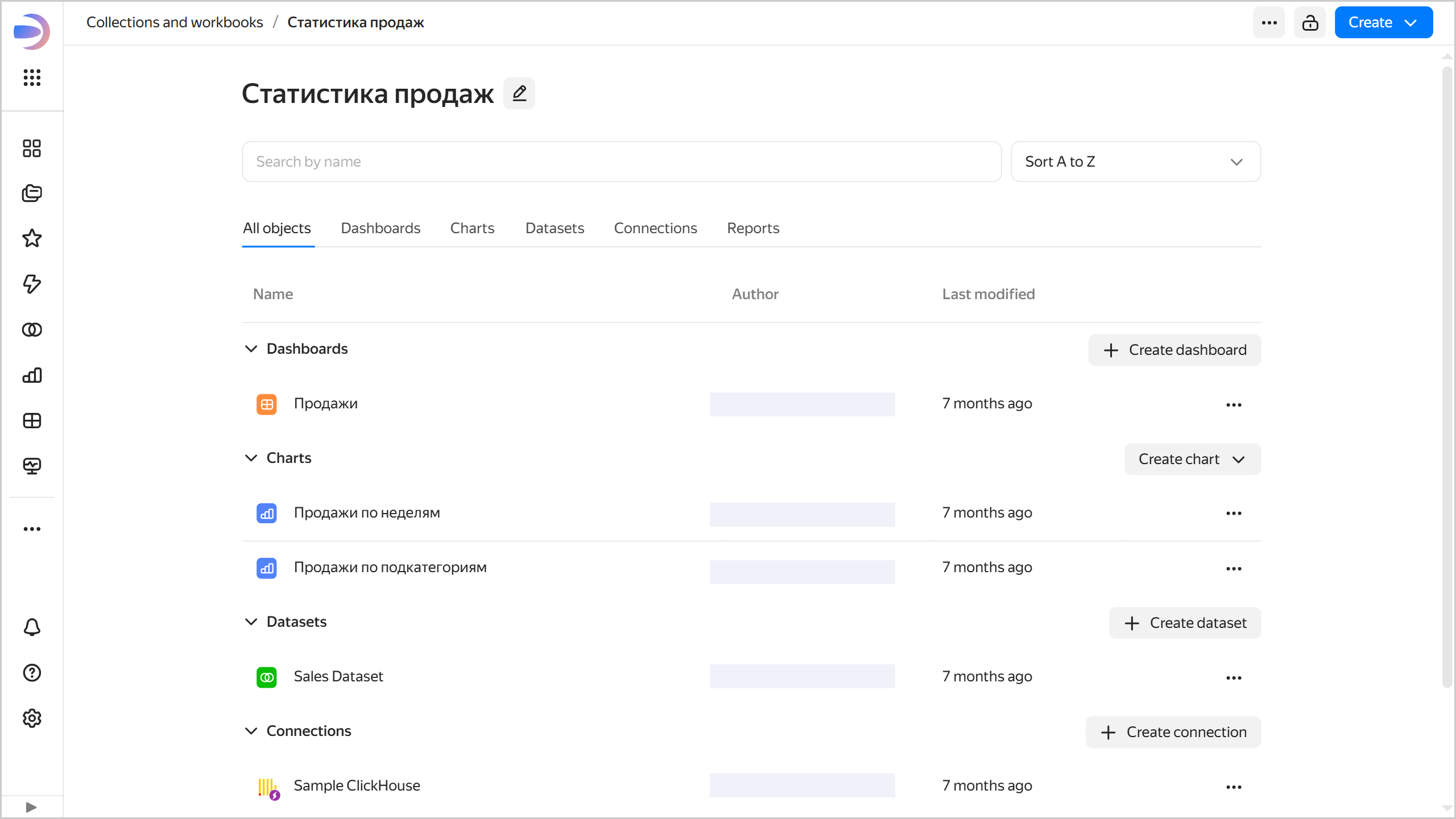
A workbook stores connections, datasets, charts, dashboards, and reports.
Workbook
-
A collection is a container used for grouping workbooks and other collections.
Features of the new approach
Workbooks make it much easier to work with objects:
-
They allow you to consistently set up permissions to linked objects: connections, datasets, charts, and dashboards.
-
With them, you can set up permissions for user groups.
-
You can copy workbooks maintaining the integrity of internal links and making their copies independent of the original.
Note
Copying workbooks with file connections is not supported.
-
You can group workbooks into collections.
Objects in workbooks and in folders of the legacy object model are independent:
- A workbook cannot be placed inside a folder.
- An object from a workbook cannot be added to a dashboard placed inside a folder.
- Folders do not support customization of user group access.
- An object from a workbook cannot be moved to a folder.
How to enable workbooks and collections
Warning
- To enable workbooks, a user must have the
datalens.adminrole. They can do this only if a DataLens instance is deployed at the organization level. - Only workbooks and collections are available in new DataLens instances.
To get started with workbooks:
-
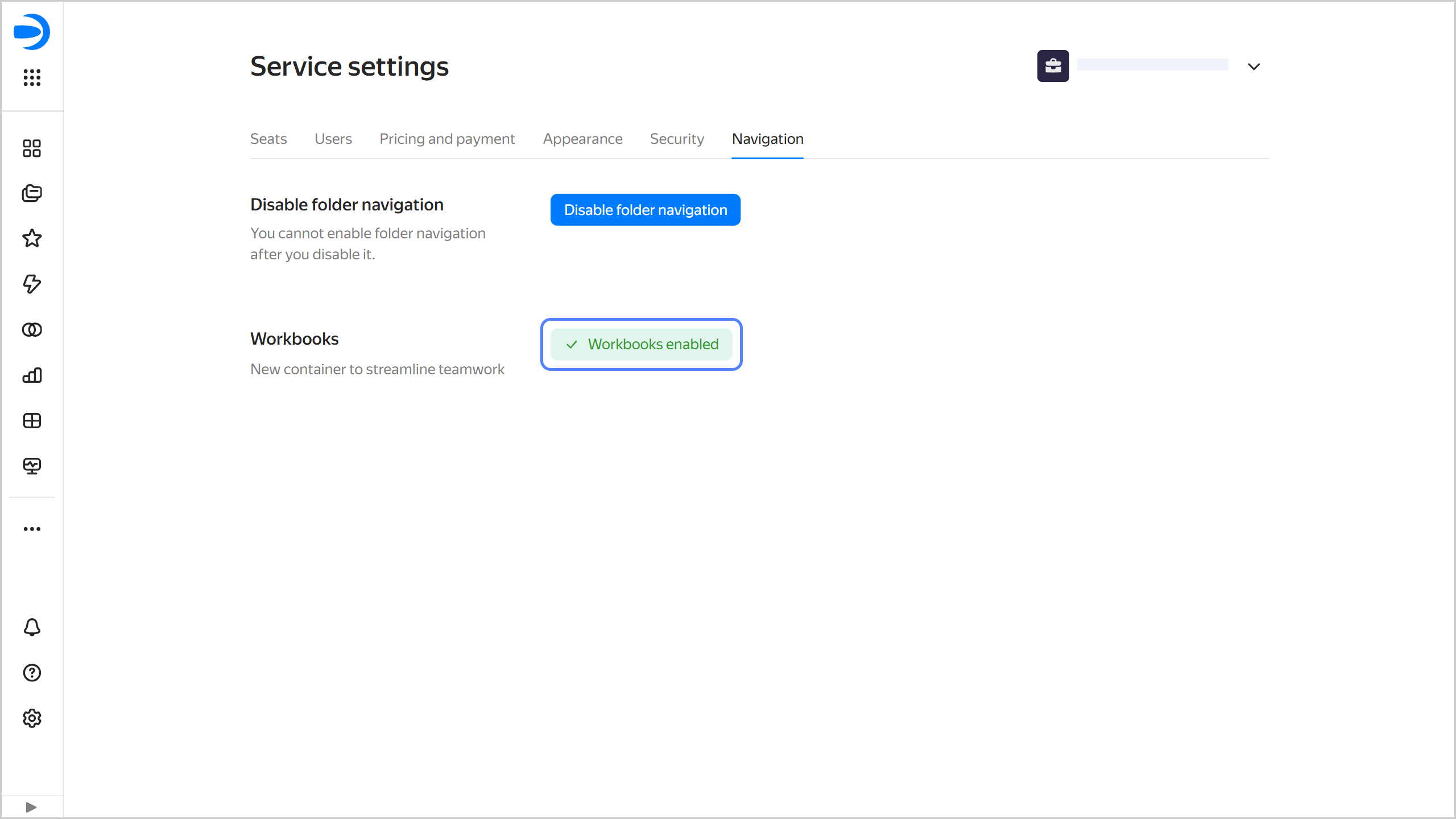
In the left-hand panel, select Service settings.
-
Select the Navigation tab.
-
Under Workbooks, click Enable workbooks.
Workbooks enabled
To transfer any object from a folder to a workbook, perform migration. If you are not going to use folder navigation anymore, you can disable it.
Viewing linked objects
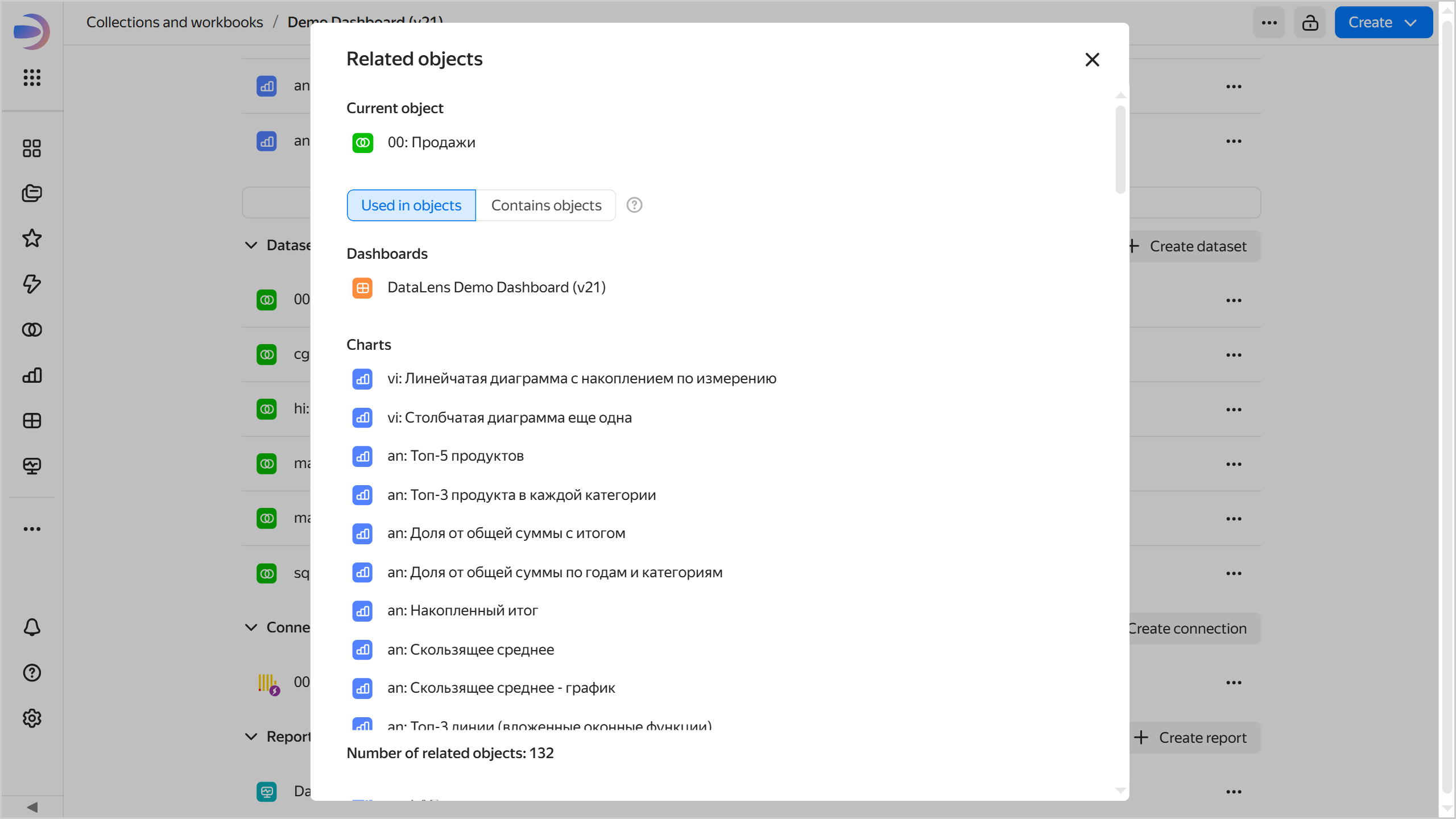
You can look up where the object is used or which objects are used by it. Do it by clicking → Linked objects on the workbook page or object editing window. For example, this can give you a clue as to the sources used to build a dashboard or the charts based on a certain dataset.
Linked object window
If you get an error when opening the linked object window, click Retry.