Yandex Cloud
Search
Discuss with expertTry it for free
  • Customer Stories
  • Documentation
  • Blog
  • All Services
    • Cloud Interconnect
    • Cloud Backup
    • Cloud Registry
    • Yandex AI Studio
    • Compute Cloud
    • Object Storage
    • Managed Service for Kubernetes®
    • Yandex BareMetal
    • Smart Web Security
    • Security Deck
    • Managed Service for PostgreSQL
    • Managed Service for ClickHouse®
    • Monium
    • Cloud CDN
    • Network Load Balancer
    • Virtual Private Cloud
    • Cloud DNS
    • Application Load Balancer
    • Yandex Cloud Video
    • Stackland
    • Yandex Cloud Router
    • Yandex Managed Service for Trino
    • Managed Service for MySQL®
    • Managed Service for Valkey™
    • Managed Service for Apache Spark™
    • Yandex StoreDoc
    • Managed Service for OpenSearch
    • Managed Service for Apache Kafka®
    • Data Transfer
    • Yandex MPP Analytics Engine for PostgreSQL
    • Yandex Managed Service for Apache Airflow®
    • Data Processing
    • Yandex MetaData Hub
    • Managed Service for YDB
    • Managed Service for Sharded PostgreSQL
    • Managed Service for YTsaurus
    • Yandex WebSQL
    • DataLens
    • Yandex Search API
    • SpeechSense
    • SpeechKit
    • DataSphere
    • Vision OCR
    • Translate
    • Yandex Identity Hub
    • Key Management Service
    • Certificate Manager
    • Yandex Lockbox
    • Audit Trails
    • SmartCaptcha
    • Cloud Desktop
    • SourceCraft Code Assistant
    • Container Registry
    • Managed Service for GitLab
    • Managed Service for Prometheus®
    • Cloud Functions
    • API Gateway
    • Yandex Cloud Postbox
    • Message Queue
    • Serverless Integrations
    • IoT Core
    • Data Streams
    • Serverless Containers
    • Cloud Notification Service
    • Yandex Query
    • Identity and Access Management
    • Yandex Cloud Console
    • Resource Manager
    • Yandex Cloud Billing
    • Yandex Cloud Quota Manager
    • Cloud Apps
  • System Status
  • Marketplace
    • Featured
    • Infrastructure & Network
    • Data Platform
    • AI for business
    • Security
    • DevOps tools
    • Serverless
    • Monitoring & Resources
  • All Solutions
    • By industry
    • By use case
    • Economics and Pricing
    • Security
    • Technical Support
    • Start testing with double trial credits
    • Cloud credits to scale your IT product
    • Gateway to Russia
    • Cloud for Startups
    • Center for Technologies and Society
    • Yandex Cloud Partner program
    • Price calculator
    • Pricing plans
  • Customer Stories
  • Documentation
  • Blog
© 2026 Direct Cursus Technology L.L.C.
Yandex DataLens
  • DataLens neuroanalyst
    • Overview
      • Overview
      • Chart settings
      • Measure Values and Measure Names
      • Multi-dataset charts
        • Creating a chart
        • Replacing a dataset in a chart
        • Creating a multi-dataset chart
        • Adding a hierarchy
        • Configuring a navigator
        • Configuring the display of null values
        • Configuring a color palette
    • Adding chart info
    • Opening a chart as a table
    • Saving a chart as an image
    • Versioning
    • Exporting data from charts
    • Chart inspector
    • Access management
  • Gallery in DataLens
  • Audit Trails events
  1. Charts
  2. Wizard charts
  3. Step-by-step guides
  4. Configuring a navigator

Configuring a navigator in Yandex DataLens

Written by
Yandex Cloud
Updated at June 2, 2026
View in Markdown

Note

The navigator is available for those charts from the list that have a field of the Date or Date and time type in their X section:

  • Line chart
  • Stacked area chart
  • Normalized stacked area chart
  • Column chart

To configure the navigator:

Warning

If you use the new DataLens object model with workbooks and collections:

  1. In the left-hand panel, select Collections and workbooks.
  2. Open the workbook you need and select an object.

Proceed with this guide from Step 2.

  1. In the left-hand panel, click Charts and select the chart you need to configure a navigator for.

  2. On the left side of the screen above the chart, click .

  3. In the Chart settings window, enable Navigator.

  4. Select the navigator display mode:

    • All lines: Display all chart lines in the navigator.
    • Choose lines: Display the selected lines in the navigator.
  5. Specify the Default period. Each time you open the chart, the last period matching this setting will be displayed. Put 0 or leave the field empty to display the whole range of values.

  6. Click Apply. The navigator will appear at the bottom of the chart.

Example of using a navigator
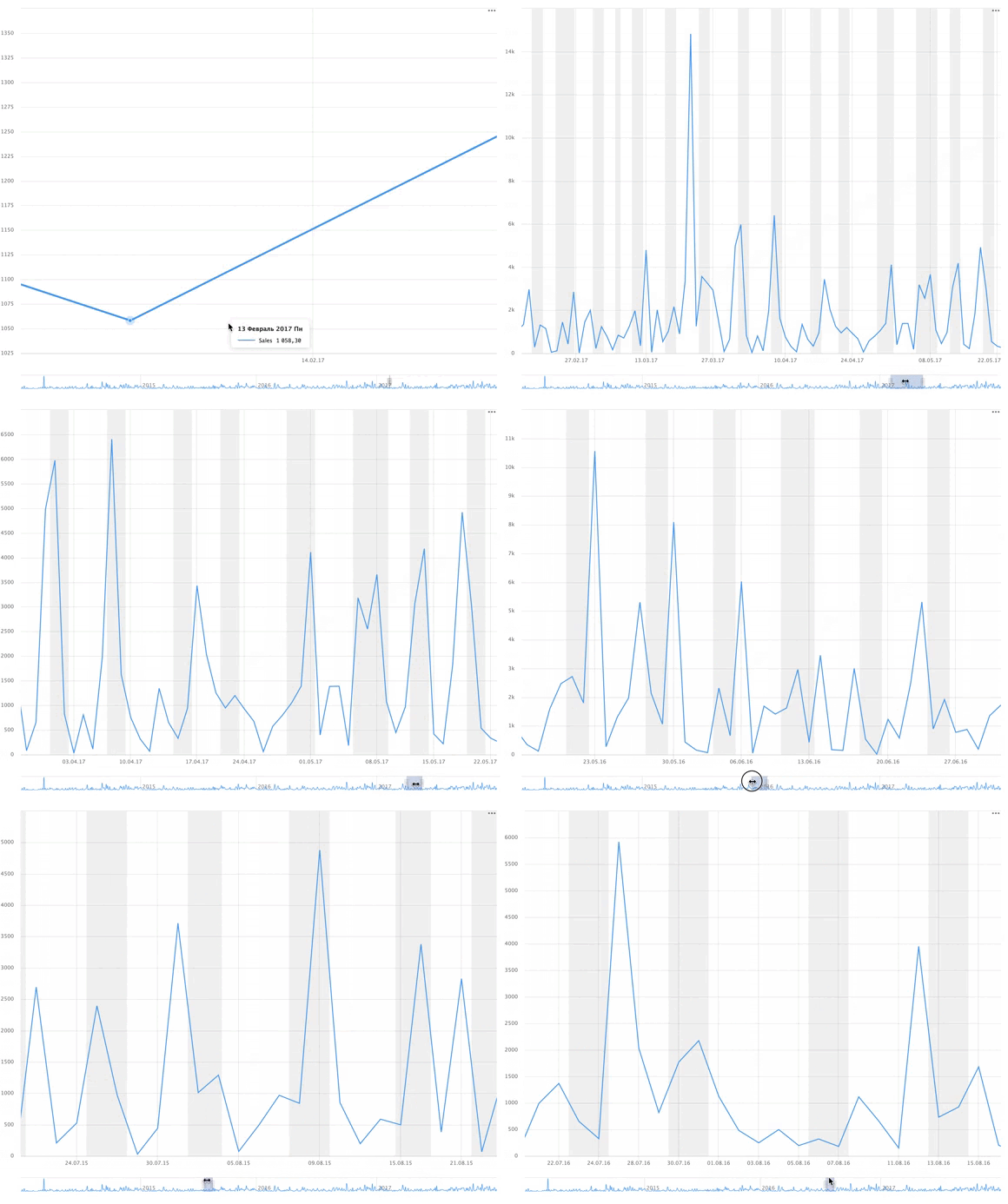
image.

Was the article helpful?

Previous
Adding a hierarchy
Next
Configuring the display of null values
© 2026 Direct Cursus Technology L.L.C.