Yandex Cloud
Search
Discuss with expertTry it for free
  • Customer Stories
  • Documentation
  • Blog
  • All Services
  • System Status
  • Marketplace
    • Featured
    • Infrastructure & Network
    • Data Platform
    • AI for business
    • Security
    • DevOps tools
    • Serverless
    • Monitoring & Resources
  • All Solutions
    • By industry
    • By use case
    • Economics and Pricing
    • Security
    • Technical Support
    • Start testing with double trial credits
    • Cloud credits to scale your IT product
    • Gateway to Russia
    • Cloud for Startups
    • Center for Technologies and Society
    • Yandex Cloud Partner program
    • Price calculator
    • Pricing plans
  • Customer Stories
  • Documentation
  • Blog
© 2026 Direct Cursus Technology L.L.C.
Yandex DataLens
  • DataLens neuroanalyst
    • Overview
    • Widgets
    • Link
    • Selectors
    • Cross-chart filtering
    • Dashboard settings
    • Mailing lists
    • Versioning
    • Parameters
    • Neuroanalyst on your dashboard
    • Trend and smoothing lines in dashboard charts
    • Markdown
      • Creating a dashboard
        • Adding a chart to a dashboard
        • Adding a selector to a dashboard
        • Adding text to a dashboard
        • Adding a header to a dashboard
        • Adding a JS selector to a dashboard

        • Adding Neuroanalyst to the dashboard
        • Copying widgets on a dashboard
      • Adding dashboard info
      • Setting up cross-chart filtering
      • Managing access to a dashboard
  • Gallery in DataLens
  • Audit Trails events
  1. Dashboards
  2. Step-by-step guides
  3. Dashboard widgets
  4. Adding a JS selector to a dashboard

Adding a JS selector to a dashboard

Written by
Yandex Cloud
Updated at July 7, 2026
View in Markdown

Before adding a selector, make sure you have the Write or Admin permission for the dashboard. For more information, see Object access permissions.

To add a selector to a dashboard:

  1. In the left-hand panel, click Dashboards and select the dashboard you need.

  2. At the top of the page, click Edit.

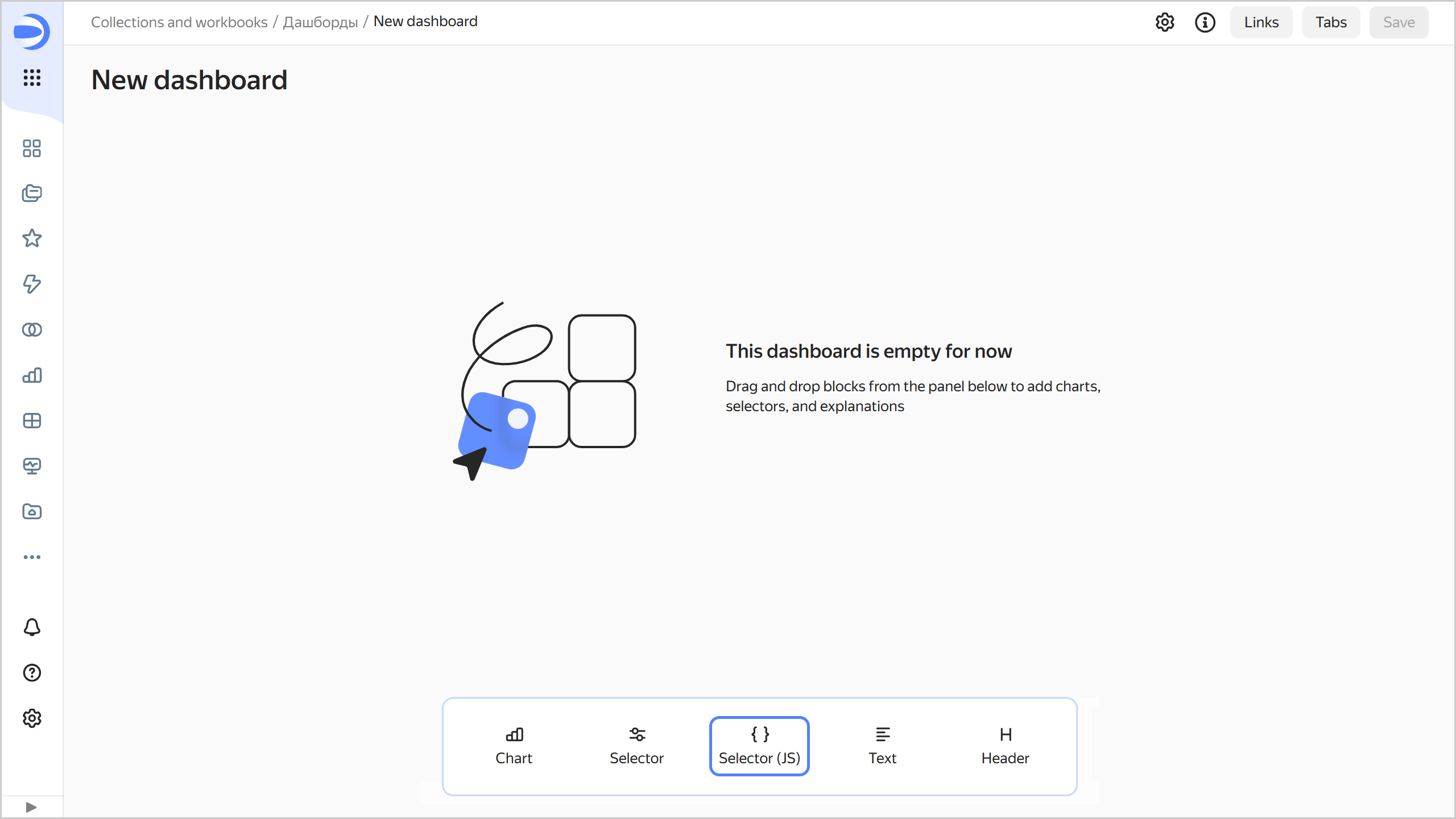
  3. In the panel at the bottom of the page, choose Selector (JS).
    image

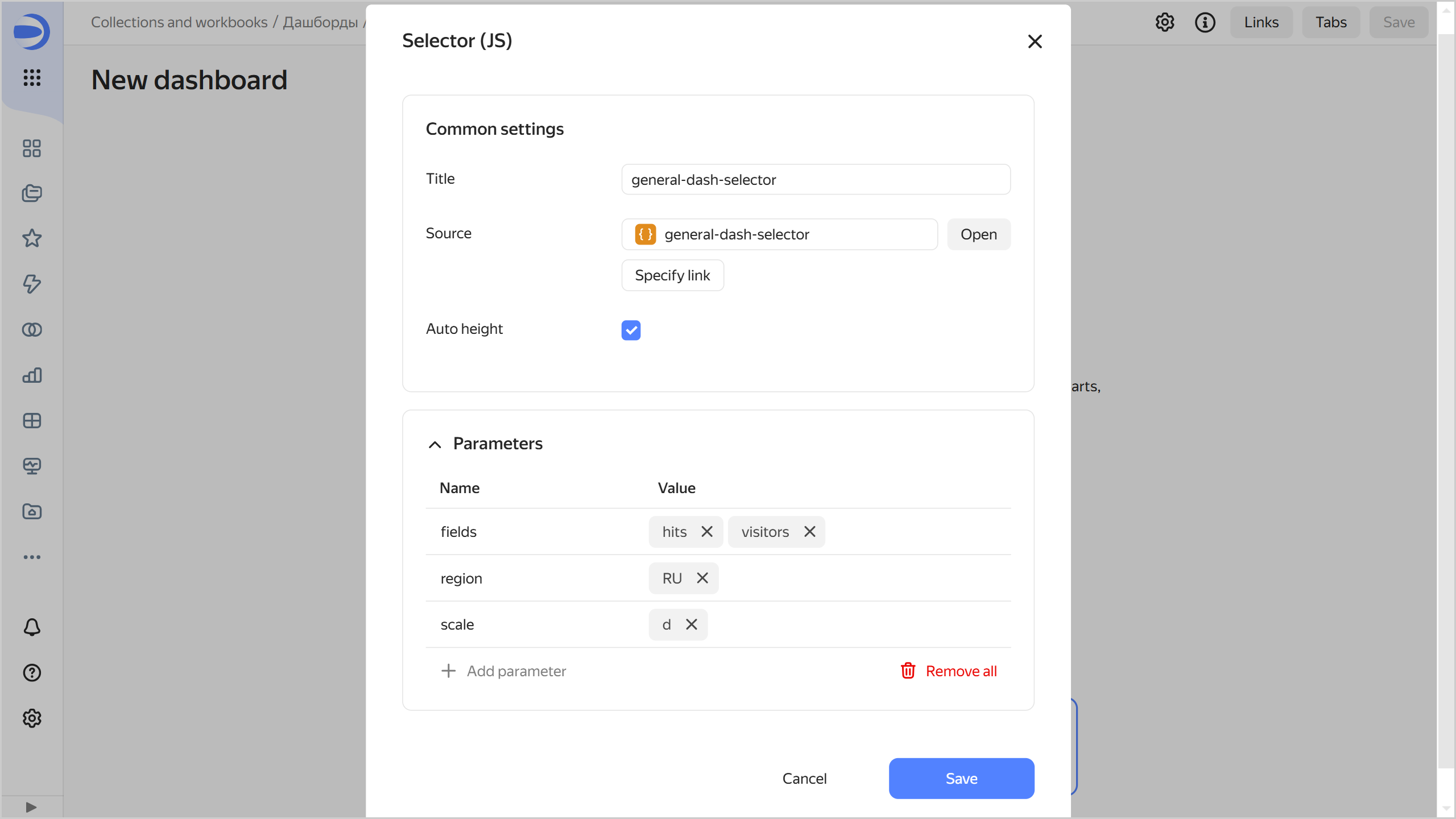
  4. Specify the selector parameters:

    • Header: To choose the selector for linking with other widgets.

    • Source: Sets the selector created in Editor. Choose the selector:

      From the list of objects
      Using a link

      Click Select and choose a selector from the list of objects. If you have already chosen the selector, you can proceed to edit it To do this, click Open to the right of the selector.

      Click Specify link. Enter the selector URL into the input field and click OK below.

    • Show in tabs: Select how to display the selector on the dashboard:

      • Current tab <tab_name>: Display on selected tab. This is the default option.
      • Selected tabs: Select one or more tabs to display the selector on. By default, the current tab is selected.
      • All tabs: Display on all tabs.
    • Background: Widget background color and opacity separately for the light and dark theme.

    • Rounding: Widget corner rounding.

    • Auto height: Automatic widget height on the dashboard.

    • Parameters: Sets a list of selector parameters and their default values. For the widget to work correctly, specify the selector parameters listed on the Params tab.
      selector-js

  5. Click Save. The widget will appear on the dashboard.

Was the article helpful?

Previous
Adding a header to a dashboard
Next
Adding Neuroanalyst to the dashboard
© 2026 Direct Cursus Technology L.L.C.