Getting started with Container Registry


Use this guide to create your first registry and try your hand at managing Docker images.
Getting started
To create a registry, you will need a folder in Yandex Cloud. If you do not have any folders yet, create one before creating a registry:
-
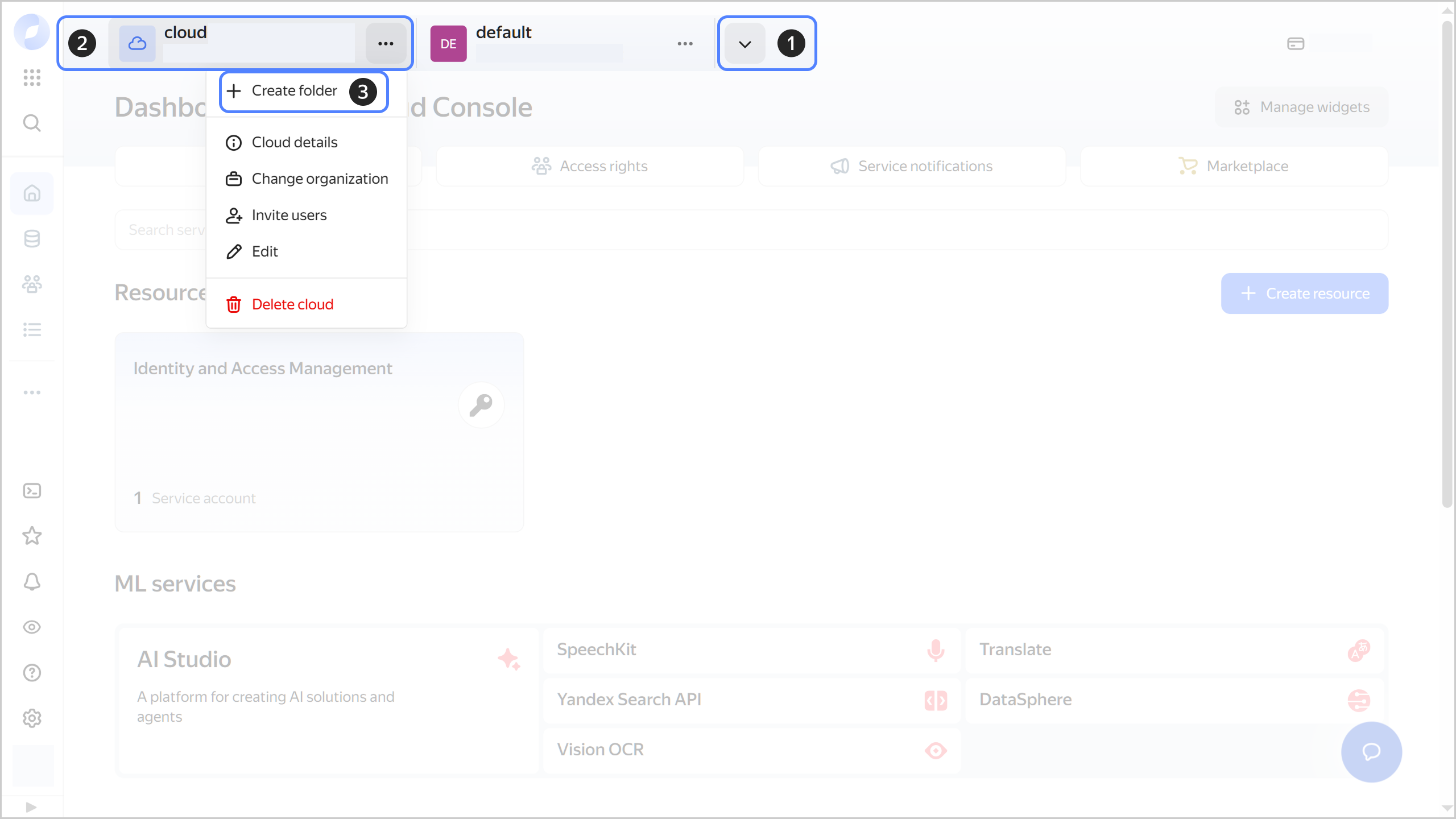
In the management console, in the top panel, click or and select the cloud.
-
To the right of the cloud name, click .
-
Select Create folder.
-
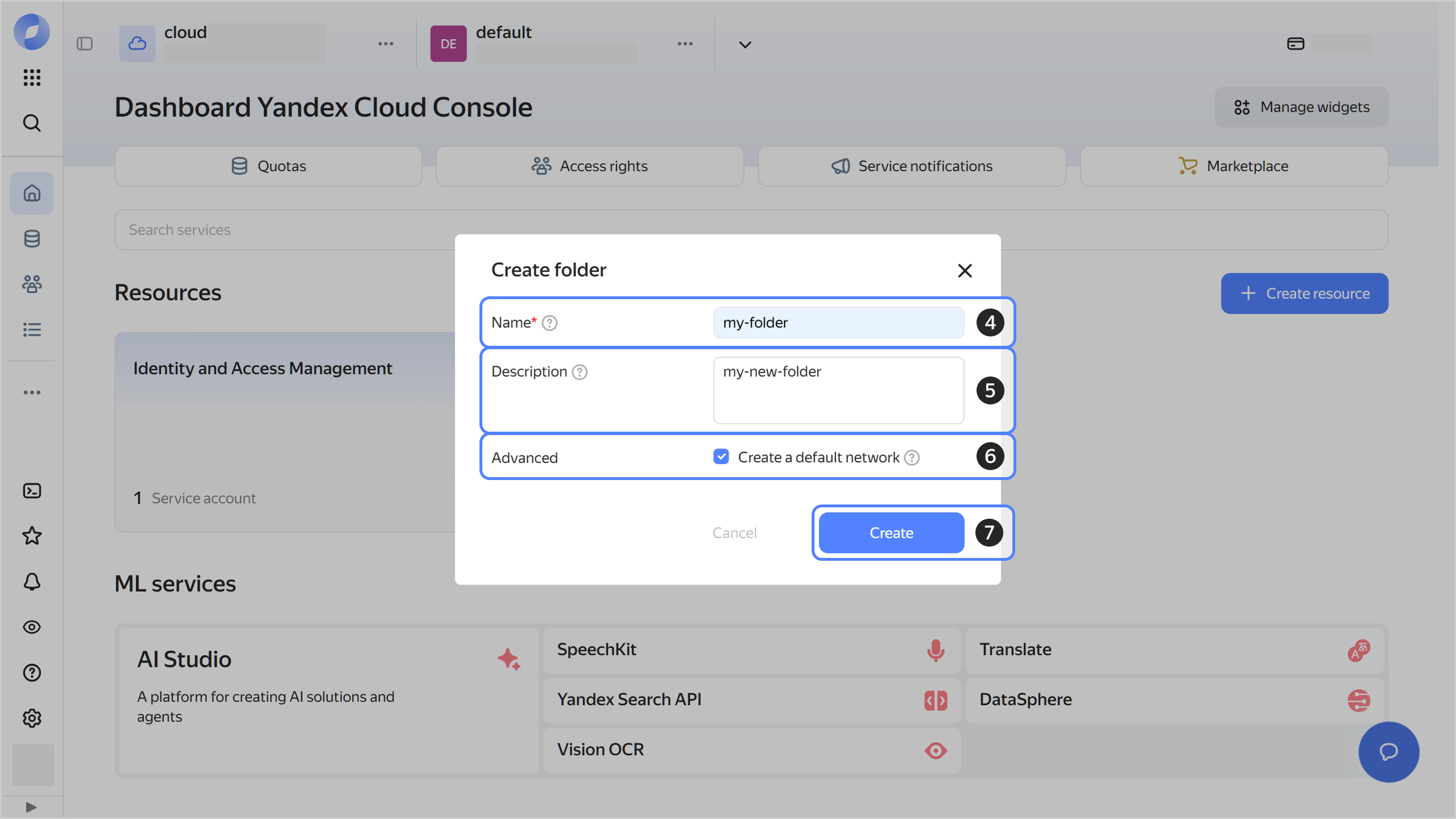
Give your folder a name. The naming requirements are as follows:
- Length: between 3 and 63 characters.
- It can only contain lowercase Latin letters, numbers, and hyphens.
- It must start with a letter and cannot end with a hyphen.
-
Optionally, specify the description for your folder.
-
Select Create a default network. This will create a network with subnets in each availability zone. Within this network, you will also have a default security group, within which all network traffic will be allowed.
-
Click Create.
To work with Container Registry and Docker images, install the Yandex Cloud CLI and configure Docker.
Creating a registry and performing basic operations on Docker images
-
Create a registry in Container Registry:
yc container registry create --name my-first-registryResult:
..done
id: crpc9qeoft23********
folder_id: b1g0itj57rbj********
name: my-first-registry
status: ACTIVE
created_at: "2018-12-25T12:24:56.286Z"
You will use the received
IDto access the created registry later. -
Authenticate to Container Registry via a Docker Credential helper:
-
Configure Docker to use
docker-credential-yc:yc container registry configure-dockerResult:
Credential helper is configured in '/home/<user>/.docker/config.json'During setup, information about the current user profile is saved.
Warning
The credential helper only works if you use Docker without
sudo. To learn how to configure Docker to run on behalf of the current user withoutsudo, see this Docker guide. -
Make sure Docker is configured.
The
/home/<user>/.docker/config.jsonconfiguration file should now contain this line:"cr.yandex": "yc"
-
-
Pull a Docker image from Docker Hub:
docker pull ubuntu -
Assign the pulled Docker image a tag in this format:
cr.yandex/<registry_ID>/<Docker_image_name>:<tag>:docker tag ubuntu \ cr.yandex/<registry_ID>/ubuntu:hello -
Push the Docker image to the repository Container Registry:
docker push \ cr.yandex/<registry_ID>/ubuntu:hello -
Run the Docker image:
docker run \
cr.yandex/<registry_ID>/ubuntu:hello